
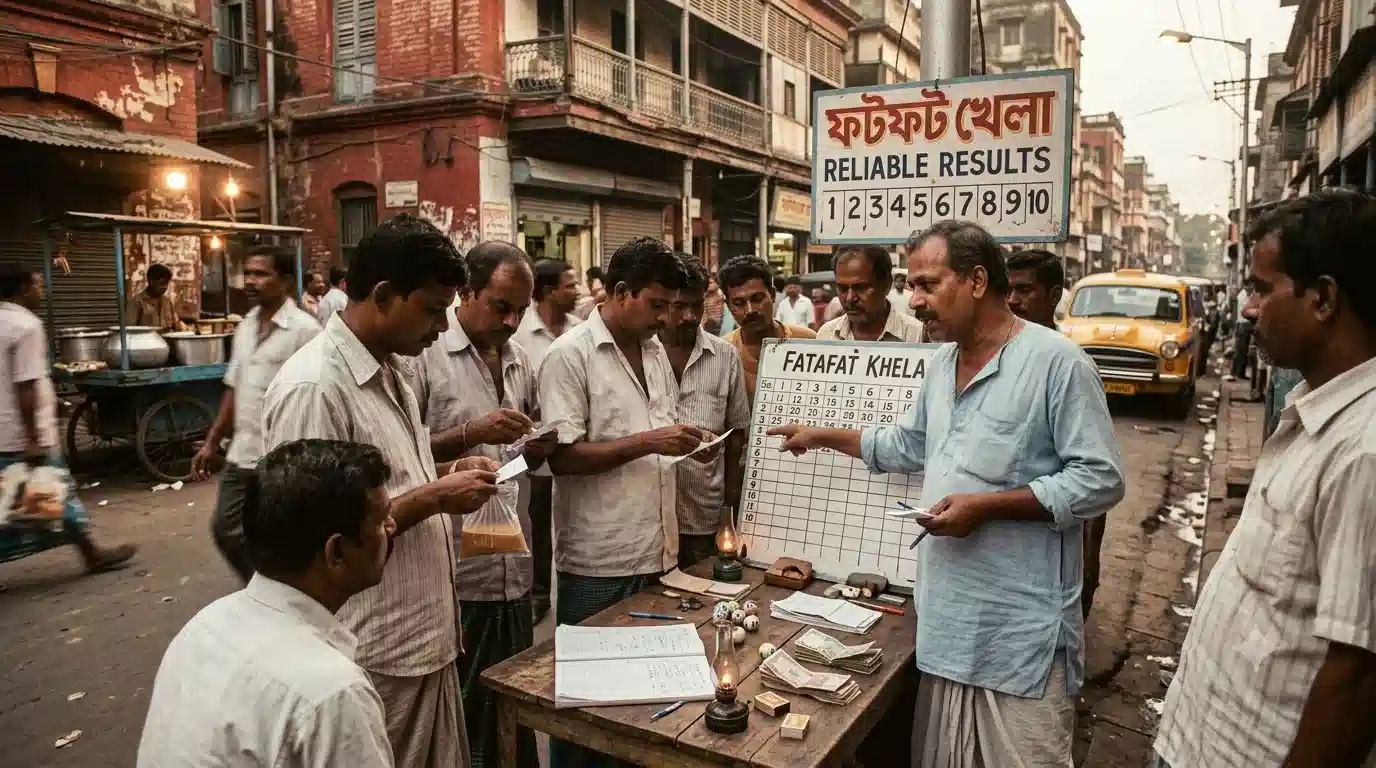
Thus, if you happened to be one of those who grew up in Kolkata, before the advent of the internet era in 2000s, you surely know what the “Fatafat khela” game is and have played at least once in some tea stall or paan shop. Also, you did not use your mobile phone to find any information at that time. In this regard, the following article will tell you how “Fatafat Khela” works before the internet era discovers it.
It Just Denotes “Quick Game”
First of all, the word “Fatafat” in Bengali means “fast” or “quick”. And before becoming the trademark, “fatafat khela” just denoted some fast number game, where people received the result quickly, in a few hours. Traditional lottery games required few hours for winning, whereas the fatafat khela took place in a few minutes after placing your bets: you gave your rupee, chose the number and knew whether you won immediately after having your tea.
Bookies Conducted All Business
Before mobile applications appear, the whole business belonged to street bookies who settled in cigarette shops and paan shops, tea stalls, tram stops and marketplaces such as Burrabazar and Sealdah. You just came to the bookie, gave him your number and bazi, gave some money and received a piece of paper with a note. No official records, no printed receipt – all the actions were done manually in the bookie’s small notebook. And the level of trust was high, as all the participants of this game were known.
The Results Were Spreading through Word of Mouth
Well, as you can guess, before becoming online, the results were spread through word of mouth. Some runner brought the number from the booking office, someone shouted out the result, sometimes the radio in the local chai stalls announced it and soon all the people in this locality knew the today’s Baji number. Sometimes the numbers were written on the walls of the shops or on pieces of cardboard near the counter. Messy, but surprisingly effective – it was like a live updating system.
The Culture Was Local, Not National
Well, what do you need to understand first? Fatafat khela has never been really popular in other cities of India. This local phenomenon of Kolkata remained local for many years, as it was based on the physical presence of people in the locality. You could not bet from another city in India, as you could not know the result of your gaming. This local nature remained till the advent of the internet destroys all the geographic borders.
The Amount of Money Was Smaller But Stable
The bets were small at that time – rupee or two or ten maximum for the serious players. However, the constant process of the game itself – eight bazis per day, immediate payment, instant losses – means that the amount of money was constantly changing. It was not about the jackpot, but about daily gaming for the chance to win. Precisely this habit remained the same in the modern version of Kolkata FF.
Conclusion
Thus, the fatafat khela before the advent of the internet was far from being the website or mobile application, but rather the experience connected with streets, chai stalls and folded papers. The game itself remained the same, but the way people interacted with it was completely different, transferring from the physical locality to the smartphone. This understanding of the outdated version will help you to understand the modern Kolkata FF better.
